【The Brain That Changes Itself】 by Norman Doidge, M.D.
※ Preface
§ 譯文: p.17
四百年來,這種想法被認為根本是不可能、匪夷所思的,因為科學和醫學的主流都認為大腦的生理結構定型了就不能改變。
原文:“Preface”
For four hundred years this venture would have been inconceivable because mainstream medicine and science believed that brain anatomy was fixed.
評析:
「根本是不可能」和「匪夷所思」的意思似乎有些相互矛盾,因為既然認定為「根本不可能」,應該就不會覺得「匪夷所思」。
若將「匪夷所思」去掉,可能較合乎語意的邏輯。
-------------------------------------------------------------------------------------------------
§ 譯文: p.17
一般的看法是過了童年期,大腦的唯一改變是開始慢慢的走下坡,當大腦細胞沒有正常的發展,或是受了傷,或者神經細胞死亡了就不能再長出新的細胞來取代,反正都是越變越糟。
原文: “Preface”
The common wisdom was that after that childhood the brain changed only when it began the long process of decline; that when brain cells failed to develop properly, or were injured, or died, they could not be replaced.
評析:
1. 「走下坡」:用來形容大腦的功能好像不太適合。
=> 譯為「大腦的唯一改變是功能開始慢慢退化」。
2. 「反正都是越變越糟」:原文中沒有這樣表達。
=> 譯為 「功能是無法被取代的」。
-------------------------------------------------------------------------------------------------
§ 譯文: p.19
他們的同儕嘲笑說他們在宣導一個華而不實的看法。
原文: “Preface”
…, and their peers belittled them for promoting a fanciful notion.
評析:
“belittled” 是輕視、貶的意思。譯成「同儕們認為這是無法實行的概念,對他們的倡導嗤之以鼻。」
-------------------------------------------------------------------------------------------------
§ 譯文: p. 33
… 這些刺激點的作用是在景色中光線暗的部分就震動,亮的部分就不動,這個「觸覺-視覺」(tactile-vision)的儀器使盲人可以閱讀,辨識出人的臉孔,知道哪一個物體比較近,哪一個比較遠。 這使他們知道物體旋轉時會改變形狀,端看從哪一個角度來觀察。
原文: p.11
… The stimulators functioned like pixels vibrating for the dark part of a scene and holding still for the brighter shades. This “tactile-vision device,” as it was called, enabled blind subjects to read, make out faces and shadows, and distinguish which objects were closer and which farther away. It allows them to discover perspective and observe how objects seem to change shape depending upon the angle from which they were viewed.
評析:
看譯文時,不太懂爲什麼在分辨遠近之後,就「知道物體旋轉時會改變形狀」。 經查證原文,意思應該是:「這使他們能夠分辨物體的遠近,並能夠觀察到從不同的角度看東西,形狀可能不一樣。」
-------------------------------------------------------------------------------------------------
§ 譯文: p.33
…因為實驗是在1960年代進行的,這些受試者甚至學會辨識當時最有名的超瘦模特兒崔姬。
原文: p.11
This being the 1960s, they even learned to recognize a picture of the anorexic supermodel Twiggy.
評析:
1. 「學會辨識」不太符合中文的語法。
2. “anorexic” 不單有「瘦」的意思,指的是「患厭食症的人」。
若譯為:「這些受試者甚至能夠認得當時患有厭食症的超級名模崔姬。」在意思上可以表現的更明確一些。
-------------------------------------------------------------------------------------------------
§ 譯文: p.36
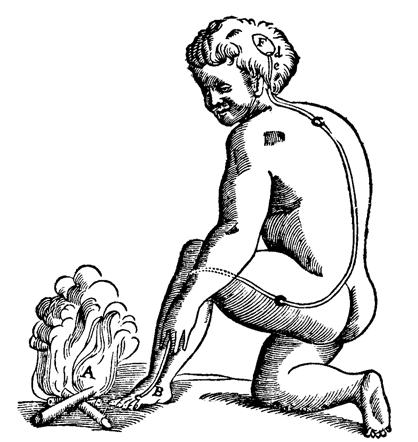
…但是事實上,雖不中,亦不遠。科學家很快的修繕了原始的圖片,說不是液體而是電流在神經之間流動。
原文: p.13
As crude as it sounds, he wasn’t so far off. Scientists soon refined his primitive picture, arguing that not some fluid but an electric current moved through the nerves.
評析:
因為之前沒有提到圖片,亦不知法國哲學家笛卡兒是如何提出想法的,加上“soon”譯成「很快的」,句子前後文整體的連接感覺不順暢。
譯為「不久,科學家們修改了笛卡兒最初的理論,認為在神經之間流動的不是液體而是電流。」
T: Descarte's primitive picture.
http://images.google.com/imgres?imgurl=
http://neurophilosophy.files.wordpress.com/2006/09/descartes-reflex.JPG&imgrefurl=
http://neurophilosophy.wordpress.com/2006/11/16/exorcising-animal-spirits-the-discovery-of-nerve-function/&h=442&w=418&sz=35&hl=en&start=1&sig2=8XOdLphPST87-Vvt9LgPrg&um=1&usg=__UpZqDFV9KM9huZLCMFCHZslLWXs=&tbnid=JiUl91U_Iyt0xM:&tbnh=127&tbnw=120&ei=PXQLScPUBo387AOWv4WBAg&prev=/images%3Fq%3DDescarte,%2Breflex%26um%3D1%26hl%3Den%26sa%3DG
http://neurophilosophy.files.wordpress.com/2006/09/descartes-reflex.JPG
http://neurophilosophy.wordpress.com/2006/11/16/exorcising-animal-spirits-the-discovery-of-nerve-function/
-------------------------------------------------------------------------------------------------
§ 譯文: p.37
他開的是二十五年前出廠舊的生鏽老車,而他太太開的是嶄新的福斯高級轎車。
原文: p.14
He drives a rusty twelve-year-old car, his wife a new model Passat.
評析:
【譯錯】 => 他開的是12年的舊車,而他太太開的則是福斯新機種的高級轎車。
-------------------------------------------------------------------------------------------------
§ 譯文: p.38
…看起來比實際年齡六十九歲年輕得多,對墨西哥裔馬雅人後代的太太有孩子般的依戀。
原文: p.14-15
... , and appears a lot younger than his sixty-nine years. He’s obviously cerebral but radiates a boyish warmth toward his wife, Esther, a Mexican of Mayan descent.
評析:
…看起來比實際年齡六十九歲年輕得多,太太是有馬雅血統的墨西哥人。他心智成熟但對太太有像孩子般的依戀。
2008年10月30日 星期四

2008年10月23日 星期四
什麼是認知科學
什麼是認知科學?
http://www.ling.fju.edu.tw/cognitive_linguistics/cognitive_science.htm
一、認知科學的定義
二、認知科學的由來和誕生
三、認知科學研究的領域範圍和特點
四、認知科學目前研究和發展的狀況
http://www.ling.fju.edu.tw/cognitive_linguistics/cognitive_science.htm
一、認知科學的定義
二、認知科學的由來和誕生
三、認知科學研究的領域範圍和特點
四、認知科學目前研究和發展的狀況
2008年10月22日 星期三
翻譯作品評析_課堂摘要
2008/10/25 (六)
Steven Pinker 2006 “The Language Instinct”
touch=palpation(醫學用語)/ palpate
※ 睡人(from蘭妮)
- shaking / tremor 顫抖
shaking較口語,tremor為專業的醫學/神經科學用語,兩者意思相同。
cf. shiver 顫抖(從內到外全身均勻的發抖)
- stiffness / rigidity 僵硬狀態
stiffness較口語,rigidity為專業的醫學/神經科學用語,兩者意思相同。
- plastic 塑膠 / 可塑性
- intense severity
※ T:
- resting tremor
- stiffness or rigidity of the muscle
- nystagmus 眼震
- tone (醫學上)肌肉張力
- catatonic 緊張性精神分裂症患者 (肌肉強直)
帕金森氏患者無法控制自己的facial expression
【譯評注意】
語意不清
對該領域的認識不清
※恐懼之邦 State of Fear(from 湘鳳)
*have many irons in the fire
同時還有很多重要的事情要做
譯評:當務之急還多著呢!
*(too many) irons in the fire
吃緊弄破碗(台語)
*Nothing is so firmly believed as that which is least know.
對最無知的事情卻最堅信不疑。
T補充: 「上智」&「下愚」對自己的想法與信念堅信不疑。
*All that matters is not remote from where the Buddha sits.
佛所言所行無一不是人生要事。
*Injunctive relief (網頁上有連結)
※Secrets of the Millionaire (from 文宏)
*I worked my butt off but kept coming up short.
my:我做的像條狗卻得不到應有的回報。
※真實的快樂 (from 薇如)
*step-by-step manuals that are reliably documented to work
解除憂鬱感覺的“步驟式操作手冊”
※T:
-每個人對於「快樂」的定義和感覺不一樣。
- 頭腦的大小不是決定聰不聰明的原因。
- 頭腦內神經網路的排列決定智商的高低;排列的越整齊,頭腦運作的越有效率。
- 智商的高低與腦部的大小不成絕對比例。
- 智力測驗應依照「性向」來分班,而非智商的高低。
-中國的「解剖學」較沒有西方那麼發達,但「哲學」仍很發達。
中國古代就有解剖科學的紀錄,但因中國以經絡系統為主,加上「身體髮膚,受之父母」的道德觀,大體較不願意被解剖。加上戰亂,後來沒有持續更好的發展。
http://www.ling.fju.edu.tw/neurolng/chinese.htm
Actually, initial development of human anatomy in China was earlier than that in Europe.
See Introduction 引言:
中國的解剖學在《皇帝內經》中已有《素問‧五藏生成》等篇章論及,但是中醫始終仍然以經絡系統為主。自新朝(9-23A.D.) 王莽令太醫尚方與巧屠共同解剖翟義黨人屍體而首開先例之後,繼之有北宋翰林醫官王惟一編製《新鑄銅人腧穴針灸圖經(1026)》,宋仁宗慶曆年間繪工宋景、吳簡根據宋廷外決歐希範等屍體繪製《歐希範五臟圖(1041-1048)》,北宋崇寧年間楊介解剖泗州處死者屍體製成《存真(環中)圖 (1102-1106)》,所以至十一二世紀為止,中國的解剖學已經具備了相當的規模。接觸西方知識之後,十七世紀漸有鄧玉函(Johann Tarrentius)譯《泰西人身說概(1629)》,羅雅谷(Diego Rho)、鄧玉函(Johhann Terrentius)、龍華民(Niccolo Longobardi)等譯述《人身圖說》,巴多明(Dominique Parrenin)將Pierre所著法文《人體解剖學》譯為滿文《欽定格體全錄(169?)》。王清任(1768-1831)著《醫林改錯 (1830)》甚具道德勇氣和實證精神。朱沛文編著的《華洋藏象約纂/中西臟腑圖象合纂(189?)》是會通比較中西解剖學的珍貴史料。
《Big Brain: The Origins and Future of Human Intelligence》
neuro-pruning : this term comes from the verb prune
prune: 神經細胞增生後,經過一段時間沒有使用,會自動修剪
neuro-pruning 神經雕塑 / 神經修剪
dopamine 多巴胺 (compared with Amino Acid 胺基酸)
EQ:Emotional Intelligence 情緒智商
SQ:Social Intelligence 社交智商
- 人的年紀越大,越注重人際關係的和諧。
-「施捨」和「受施捨」的雙方,甚至是周圍的人,在當時能獲得情緒上的感受,免疫力也會增加。
【organ sense】
olfactory sense = smell 嗅覺
gustatory taste = taste 味覺
upright 從四肢在地上到站立
homo habilis 居有定所的
homo erectus 兩腳走路(會站立的)
homo sapien (有智慧的)
philosophy in flesh 肉身體驗哲學
- 女生sensor比男生多,天生較敏感。
This was only convenient rhetorics for the class, intending to help the students understand the issue, not anatomically well-grounded, referring more to how the system works.
NLP - Neurolinguistic Programming 神經語言排程
Neurolinguistic:手段
Programming:機制
※ Neurolinguistic Programming 含括 Neurolinguistic & Neuroscience
(常用於心理治療、應用於日常生活中)
- 透過語言溝通(含語言、聲調、肢體語言),加上對於頭腦構造的瞭解,期望能改善原本腦部對於訊息的錯誤處理方式,讓對象漸習慣於某種行為和思考模式,於潛移默化中覺得是自然的事。屬於一種心理治療。
cf. Neurolinguistics 神經語言學
處理 brain 及 language 之間對應關係的science
【Dictionary】 The American Heritage Dictionary of the English Language
【評析方式】
譯文:(邏輯或語言上不通,或對該事該領域的理解)
原文:
譯評:
-----------------------------------------------------------------------------------------------------
2008/10/11 (六)
《本草綱目》 李時珍 : 蒐集既有的資料,加上李時珍自己的見解,或更正從前的錯誤。
-「本」,書本上有記載的,稱為「本藥」。
-「草」,從前書本上沒有記載的,稱為「草藥」。
-「綱目」,指「列出條目」。
- “Survival of the Fittest” 達爾文「演化論」
為了散佈保存自己的基因,有Natural Selection。
“The God Delusion” 神的幻象 (新書)
※ Video: Delusion
- 作科學的研究,若一開始就將「第一因」提出,很多部分就無法繼續討論下去。
因此,做研究時,不需要用到的理論或神論 (god),不需提出。
The story I mentioned was a dialogue between Napoleon and LaPlace, the famous french mathematician and astronomist.
LaPlace 拉普拉斯
拉普拉斯定律: 確定「太陽」是太陽系的中心,周圍星球以橢圓形軌道運行,移動的速度和距離太陽的遠近成反比。(距離近時,速度快)
※ Video:The Enemies of Reason - Part 1 - Slaves to superstitious
TED(機構)- Technology, Engineer, & Design
常邀請名人演講,內有summary of the speech
evolutionary biology 演化生物學
evolutionary psychology 演化心理學
- 理性越抬頭,宗教漸受到挑戰。
- “Mind & Life Institute” 達賴喇嘛為主的機構
《Train Mind Change Brain》 by Sharon Begley
(同學的blog)
用東方的基本概念進行西方的研究
2008年10月11日 星期六
評析_The Devil Wears Prada
中文書名: 穿著PRADA的惡魔
英文書名: The Devil Wears Prada
作 者: Lauren Weisberger
Publisher: Doubleday
譯 者: 王欣欣
出 版 商: 英屬維京群島商高寶國際有限公司台灣分公司 / 2004年出版
【評析】
<中> P.23 【強調語氣:大寫字體及斜體字】
「她,真,是,個,賤,人! 我再也不要跟她和下去了。沒人能受得了她,我說真的,沒人受得了!」
「她不折不扣是個賤人」
<英> P.14
“She. Is. Such. A. Bitch! I cannot deal with her anymore. Who does that? I mean, really-WHO DOES THAT?”
“Total bitch.”
-------------------------------------------------------------------------------------------------
<中> P. 27 【翻錯:信紙 => 文具】
「身為米蘭達的初級助理,你要時時揣摩她的需求,把事情都辦好。這些事包含的範圍很廣,從幫她訂喜歡的信紙,到陪她逛街買東西,什麼事都有可能,不過不管什麼事,總之都是很有意思的。」
<英> P. 17
“…As Miranda’s junior assistant, you’d be solely responsible for anticipating her needs and accommodating them. Now, that could be anything from ordering her favorite stationery to accompanying her on a shopping trip. Either way, it’s always fun.”
-------------------------------------------------------------------------------------------------
<中> P. 35 【翻錯】
「喂?」看看鐘,早上七點十五分,誰這麼早打電話來吵人?
……
「居然有人早上七點半就打電話來吵我」
<英> P. 25
“Hello?” I mumbled, glancing at the clock and seeing that it was 7:15 A.M. Who the hell would call at such an hour?
……
“… I’m awakened by… And she’s looking for you. At seven-fifteen in the freakin’ morning.”
-------------------------------------------------------------------------------------------------
<中> P. 38 【Good Translation】
「…有了Runway的經歷、米蘭達的推薦信,加上妳將來累積的作品,天哪!妳會無往不利的。到時候要進『紐約客』不費吹灰之力。」
<英> P. 28
“… But with Runway on your resume and a letter from this Miranda woman, and maybe even a few clips by the time you’re done, hell, you can do anything. The New Yorker will be beating down your door.”
-------------------------------------------------------------------------------------------------
<中> P. 39 【“不顧實際的社會改良家”-- A bit strange,難翻】
「我很想,可是明天晚上有年輕老師的聚會,已經約好了,而且這對我們的團隊工作有幫助,我不能不去。」
「那就去吧!不顧實際的社會改良家!去做你的好事吧。」
<英> P. 29
“Sounds tempting. You know I would, but I organized some of the younger teachers to get together tomorrow night for happy hour. Thought it might help us all work as a team. I really can’t miss it.”
“Goddamn do-gooder. Always doing good, spreading good cheer wherever you go.”
-------------------------------------------------------------------------------------------------
<中> P. 40
【句子冗長 => 我剛在一家超有名的雜誌社找到工作,可以和這一行中最有權勢的女人共事】
「…我剛剛在一家超有名的雜誌找到了一份可以和這一行中最有權勢的女人共事的工作,成千上萬的女孩都想做這份工作想得要命喔!」
<英> P. 30
“I did just get a job at a really famous magazine with one of the most powerful women in the industry. A job a million girls would die for.”
-------------------------------------------------------------------------------------------------
<中> P. 54 【Redundant】
「是的,當然。那是自然。」
<英> P. 44
“Yes, of course. Naturally.”
------------------------------------------------------------------------------------------------
<中> P. 66 【Good Translation】
「妳很漂亮,就是太壯了點,而且沒有穿對衣服。」
<英> P. 55
“YOU’RE PRETTY, BUT TOO WHOLESOME, AND THE OUTFIT DOES NOTHING FOR YOU!”
-------------------------------------------------------------------------------------------------
<中> P. 66 【與中文表達方式不合 => 髮質也不錯】
「… 妳本質不錯,腿好看,頭髮也好,而且又不胖。 只要不胖我就有辦法。…」
<英> P. 55
“… YOU’RE GOOD RAW MATERIAL. NICE LEGS, GREAT HAIR, AND NOT FAT. I CAN WORK WITH NOT FAT….”
------------------------------------------------------------------------------------------------
<中> P. 89 【與中文表達方式不合 => 就好像大家都受到嚴重的藥物控制著一樣】
「…就好像…就好像大家都認真吃藥似的。我不知道…」
<英> P. 77
“… Almost like they’re all on serious prescription drugs. I don’t know…”
------------------------------------------------------------------------------------------------
<中> P. 104 【Good Translation】
「又為米蘭達傷腦筋?」
<英> P. 90
“Having a Miranda moment?”
-------------------------------------------------------------------------------------------------
<中> P. 106 【Good Translation】
「…我真的好想好想留下來,可是我非先去處理這件事不可,…」
<英> P. 92
“… There’s nothing I’d rather do than stay here, but she’s got me on a pretty short leash right now…”
------------------------------------------------------------------------------------------------
<中> P. 120 【中文“太太”前面通常冠的是夫姓】
「哈囉,普瑞斯特利太太。」
<英> P. 106
“Hello, Ms. Priestly,”
-------------------------------------------------------------------------------------------------
<中> P. 121 【翻錯 + 漏翻】 => 千萬別跟她說話除非她主動開口
「要是我們有話非用說的不可,就說悄悄話。除此之外,禁止交談。還有,絕對不能叫她普瑞斯特利太太,要叫米蘭達,懂嗎?」
<英> P. 106 (email dialogue)
“If you and I have to talk, we whisper. Otherwise, no talking. And don’t EVER speak to her unless she speaks to you. And do not EVER call her Ms. Priestly – it’s Miranda. Got it?”
-------------------------------------------------------------------------------------------------
<中> P. 123 【與中文表達方式不合 => 色彩大師】
「這位是色彩導師馬歇爾,…」
<英> P. 109
“Marshall Madden, color guru, …”
-------------------------------------------------------------------------------------------------
<中> P. 133 【翻錯 => 他 “暗示”】
「沒,至少是還沒。不過他說我應該去找他做。」
<英> P. 117
“No, I’m afraid not. At least not yet, although he wasn’t all that subtle in telling me that I probably should be.”
-------------------------------------------------------------------------------------------------
<中> P. 139
【翻錯 => 衣櫥裡有太多東西了,呃,有時若你需要借些什麼的話,不會有人發現的啦!】
「… 我知道這些東西很貴,但不是沒有變通的辦法。 我從『衣櫥』『借』過不知道多少東西,根本不會有人發現。」
<英> P. 123
“… Now, I know this stuff gets expensive, but there’s ways around that. I’ve got so much stuff in the Closet that no one will notice if your need to, uh, borrow some of it sometimes.”
-------------------------------------------------------------------------------------------------
<中> P. 143 【翻錯 => 星期四】
他在身後喊:「我上星期二就來了。」
<英> P. 127
… he called after me as I headed toward the elevator bank. “I’ve been here since last Thursday morning.”
-------------------------------------------------------------------------------------------------
<中> P. 143 【整段漏翻】 =>呈現女主角與門房間的互動情形和良好關係,不宜全部省略。
<英> P. 128
I pushed against the turnstile, praying that this Monday would be the exception, that he’d let me pass without a performance. Negative.
“Yo, tell me what you want, what you really, really want,” he sang with his huge, toothy smile and Spanish accent. And all the pleasure of making the cabbie happy and finding out that I had arrived ahead of Miranda vanished. I was left, as I as every morning, wanting to reach across the security counter and tear the flesh from Eduardo’s face. But since I was such a good sport and he was one of my only friends in the place, I weakly acquiesced. “I’ll tell you what I want, what I really, really want, I wanna - I wanna - I wanna - I wanna- I really, really , really wanna zigga aiz aaaaaahhhh,” I sand meekly in a pitiful tribute to the Spice girls’ nineties hit. And once again, Eduardo grinned and buzzed me through.
<中> P. 117 【整段漏翻】
<英> P. 102 ~ 103
“Some boys kiss me, some boys hug me, I think they’re okay-ay,” Eduardo, the round and slightly sweaty security guard, began singing in a high-pitched voice from behind the security desk. ……
The day before was “I’m Too Sexy.” As he sang, “I’m too sexy for Milan, too sexy for Milan, New York and Japan,” I had to walk down the lobby’s imaginary runway. ……
“If they don’t give me proper credit, I just walk away-ay,” I muttered, allowing the words to stretch and fade, just like Madonna.
He raised his eyebrows. “Where’s the enthusiasm, girlfriend?”
I thought I’d do something violent if I heard his voice again, so I dropped my bag of papers on the counter, threw both arms up in the air and thrust my hips to the left, while pursing my lips into a dramatic pout. “A material! A material! A material! A material… WORLD!” I all but screamed, and he cackled and clapped and whoosh! He buzzed me through.
Mental note: Discuss with Eduardo when and where it is appropriate to make a complete ass of me.
-------------------------------------------------------------------------------------------------
<中> P. 161 【聽說你的工作很不錯耶! 能跟那麼有才華的人一起做事,你真是幸運!】
「… 妳聽起來工作很忙呀? 不過幫那麼有才華的人工作一定很有趣,妳真幸運耶!」
<英> P. 145
“… it sounds like you have quite some job there! How interesting it must be, working for such a talented woman. You’re a lucky girl, indeed.”
-------------------------------------------------------------------------------------------------
<中> P. 162 【與中文表達方式不合 => 一點都“沒”錯】
「一點都不錯,親愛的,…」
<英> P. 145
“You can say that again, dear!…”
-------------------------------------------------------------------------------------------------
<中> P. 163 【漏翻+語意不清】
我大笑起來:「是怎樣?你覺得我朋友是妓女嗎?她只是比較開放而已。她現在有沒有對象?你開什麼玩笑?!昨晚粉紅襯衫難才在她那過夜耶!但我不知道那男的名字。」
我大笑起來:「她最近跟一個粉紅襯衫男生在一起,真名我不知道,不過他昨晚在她那裡過夜。」
<英> P.146
I laughed. “Go on, say it. Do you think my friend is a whore? She’s just free-spirited, is all. And is she seeing someone? What kind of question is that? Someone named Pink-Shirt Boy stayed over there last night. I don’t think I know his real name.”
-------------------------------------------------------------------------------------------------
<中> P. 169 【強調語氣:大寫字體】
「…愛蜜麗,我,現,在,就,要,吃,飯!…」
<英> P. 152
“… Emily. I. Want. My. Lunch. Now!”
-------------------------------------------------------------------------------------------------
<中> P. 179 【翻錯:她這幾個星期】
「她這星期在學校一定很不好過。」
<英> P. 161
“I’m sure she’s just had a rough couple of weeks in school,”
-------------------------------------------------------------------------------------------------
<中> P. 180 【你難道不能留下來過夜嗎?】
「你連留晚一點都不行嗎?」
<英> P. 161
“So, you won’t even stay over tonight?” I asked hopefully.
----------------------------------------------------------------------------------------------
<中> P. 110 【翻錯 => 一月三日】
那是一個陰冷的日子,十一月三日,上午十點多,我在辦公室,心情很好。
<英> P. 97
It was a little after ten on a cold and gray January 3, and I was actually happy to be at work.
-------------------------------------------------------------------------------------------------
<中> P. 115 【翻錯 => 三秒鐘】
我只用了三分鐘衝過走廊,經過時尚組,,聽見大家驚慌失措叫著:「…」
<英> P. 100
It took me only three seconds to wind through the hallways and pass through the fashion department, but I already heard panicked cried of “Emily said she’s on her way in” and “Miranda’s coming!”
英文書名: The Devil Wears Prada
作 者: Lauren Weisberger
Publisher: Doubleday
譯 者: 王欣欣
出 版 商: 英屬維京群島商高寶國際有限公司台灣分公司 / 2004年出版
【評析】
<中> P.23 【強調語氣:大寫字體及斜體字】
「她,真,是,個,賤,人! 我再也不要跟她和下去了。沒人能受得了她,我說真的,沒人受得了!」
「她不折不扣是個賤人」
<英> P.14
“She. Is. Such. A. Bitch! I cannot deal with her anymore. Who does that? I mean, really-WHO DOES THAT?”
“Total bitch.”
-------------------------------------------------------------------------------------------------
<中> P. 27 【翻錯:信紙 => 文具】
「身為米蘭達的初級助理,你要時時揣摩她的需求,把事情都辦好。這些事包含的範圍很廣,從幫她訂喜歡的信紙,到陪她逛街買東西,什麼事都有可能,不過不管什麼事,總之都是很有意思的。」
<英> P. 17
“…As Miranda’s junior assistant, you’d be solely responsible for anticipating her needs and accommodating them. Now, that could be anything from ordering her favorite stationery to accompanying her on a shopping trip. Either way, it’s always fun.”
-------------------------------------------------------------------------------------------------
<中> P. 35 【翻錯】
「喂?」看看鐘,早上七點十五分,誰這麼早打電話來吵人?
……
「居然有人早上七點半就打電話來吵我」
<英> P. 25
“Hello?” I mumbled, glancing at the clock and seeing that it was 7:15 A.M. Who the hell would call at such an hour?
……
“… I’m awakened by… And she’s looking for you. At seven-fifteen in the freakin’ morning.”
-------------------------------------------------------------------------------------------------
<中> P. 38 【Good Translation】
「…有了Runway的經歷、米蘭達的推薦信,加上妳將來累積的作品,天哪!妳會無往不利的。到時候要進『紐約客』不費吹灰之力。」
<英> P. 28
“… But with Runway on your resume and a letter from this Miranda woman, and maybe even a few clips by the time you’re done, hell, you can do anything. The New Yorker will be beating down your door.”
-------------------------------------------------------------------------------------------------
<中> P. 39 【“不顧實際的社會改良家”-- A bit strange,難翻】
「我很想,可是明天晚上有年輕老師的聚會,已經約好了,而且這對我們的團隊工作有幫助,我不能不去。」
「那就去吧!不顧實際的社會改良家!去做你的好事吧。」
<英> P. 29
“Sounds tempting. You know I would, but I organized some of the younger teachers to get together tomorrow night for happy hour. Thought it might help us all work as a team. I really can’t miss it.”
“Goddamn do-gooder. Always doing good, spreading good cheer wherever you go.”
-------------------------------------------------------------------------------------------------
<中> P. 40
【句子冗長 => 我剛在一家超有名的雜誌社找到工作,可以和這一行中最有權勢的女人共事】
「…我剛剛在一家超有名的雜誌找到了一份可以和這一行中最有權勢的女人共事的工作,成千上萬的女孩都想做這份工作想得要命喔!」
<英> P. 30
“I did just get a job at a really famous magazine with one of the most powerful women in the industry. A job a million girls would die for.”
-------------------------------------------------------------------------------------------------
<中> P. 54 【Redundant】
「是的,當然。那是自然。」
<英> P. 44
“Yes, of course. Naturally.”
------------------------------------------------------------------------------------------------
<中> P. 66 【Good Translation】
「妳很漂亮,就是太壯了點,而且沒有穿對衣服。」
<英> P. 55
“YOU’RE PRETTY, BUT TOO WHOLESOME, AND THE OUTFIT DOES NOTHING FOR YOU!”
-------------------------------------------------------------------------------------------------
<中> P. 66 【與中文表達方式不合 => 髮質也不錯】
「… 妳本質不錯,腿好看,頭髮也好,而且又不胖。 只要不胖我就有辦法。…」
<英> P. 55
“… YOU’RE GOOD RAW MATERIAL. NICE LEGS, GREAT HAIR, AND NOT FAT. I CAN WORK WITH NOT FAT….”
------------------------------------------------------------------------------------------------
<中> P. 89 【與中文表達方式不合 => 就好像大家都受到嚴重的藥物控制著一樣】
「…就好像…就好像大家都認真吃藥似的。我不知道…」
<英> P. 77
“… Almost like they’re all on serious prescription drugs. I don’t know…”
------------------------------------------------------------------------------------------------
<中> P. 104 【Good Translation】
「又為米蘭達傷腦筋?」
<英> P. 90
“Having a Miranda moment?”
-------------------------------------------------------------------------------------------------
<中> P. 106 【Good Translation】
「…我真的好想好想留下來,可是我非先去處理這件事不可,…」
<英> P. 92
“… There’s nothing I’d rather do than stay here, but she’s got me on a pretty short leash right now…”
------------------------------------------------------------------------------------------------
<中> P. 120 【中文“太太”前面通常冠的是夫姓】
「哈囉,普瑞斯特利太太。」
<英> P. 106
“Hello, Ms. Priestly,”
-------------------------------------------------------------------------------------------------
<中> P. 121 【翻錯 + 漏翻】 => 千萬別跟她說話除非她主動開口
「要是我們有話非用說的不可,就說悄悄話。除此之外,禁止交談。還有,絕對不能叫她普瑞斯特利太太,要叫米蘭達,懂嗎?」
<英> P. 106 (email dialogue)
“If you and I have to talk, we whisper. Otherwise, no talking. And don’t EVER speak to her unless she speaks to you. And do not EVER call her Ms. Priestly – it’s Miranda. Got it?”
-------------------------------------------------------------------------------------------------
<中> P. 123 【與中文表達方式不合 => 色彩大師】
「這位是色彩導師馬歇爾,…」
<英> P. 109
“Marshall Madden, color guru, …”
-------------------------------------------------------------------------------------------------
<中> P. 133 【翻錯 => 他 “暗示”】
「沒,至少是還沒。不過他說我應該去找他做。」
<英> P. 117
“No, I’m afraid not. At least not yet, although he wasn’t all that subtle in telling me that I probably should be.”
-------------------------------------------------------------------------------------------------
<中> P. 139
【翻錯 => 衣櫥裡有太多東西了,呃,有時若你需要借些什麼的話,不會有人發現的啦!】
「… 我知道這些東西很貴,但不是沒有變通的辦法。 我從『衣櫥』『借』過不知道多少東西,根本不會有人發現。」
<英> P. 123
“… Now, I know this stuff gets expensive, but there’s ways around that. I’ve got so much stuff in the Closet that no one will notice if your need to, uh, borrow some of it sometimes.”
-------------------------------------------------------------------------------------------------
<中> P. 143 【翻錯 => 星期四】
他在身後喊:「我上星期二就來了。」
<英> P. 127
… he called after me as I headed toward the elevator bank. “I’ve been here since last Thursday morning.”
-------------------------------------------------------------------------------------------------
<中> P. 143 【整段漏翻】 =>呈現女主角與門房間的互動情形和良好關係,不宜全部省略。
<英> P. 128
I pushed against the turnstile, praying that this Monday would be the exception, that he’d let me pass without a performance. Negative.
“Yo, tell me what you want, what you really, really want,” he sang with his huge, toothy smile and Spanish accent. And all the pleasure of making the cabbie happy and finding out that I had arrived ahead of Miranda vanished. I was left, as I as every morning, wanting to reach across the security counter and tear the flesh from Eduardo’s face. But since I was such a good sport and he was one of my only friends in the place, I weakly acquiesced. “I’ll tell you what I want, what I really, really want, I wanna - I wanna - I wanna - I wanna- I really, really , really wanna zigga aiz aaaaaahhhh,” I sand meekly in a pitiful tribute to the Spice girls’ nineties hit. And once again, Eduardo grinned and buzzed me through.
<中> P. 117 【整段漏翻】
<英> P. 102 ~ 103
“Some boys kiss me, some boys hug me, I think they’re okay-ay,” Eduardo, the round and slightly sweaty security guard, began singing in a high-pitched voice from behind the security desk. ……
The day before was “I’m Too Sexy.” As he sang, “I’m too sexy for Milan, too sexy for Milan, New York and Japan,” I had to walk down the lobby’s imaginary runway. ……
“If they don’t give me proper credit, I just walk away-ay,” I muttered, allowing the words to stretch and fade, just like Madonna.
He raised his eyebrows. “Where’s the enthusiasm, girlfriend?”
I thought I’d do something violent if I heard his voice again, so I dropped my bag of papers on the counter, threw both arms up in the air and thrust my hips to the left, while pursing my lips into a dramatic pout. “A material! A material! A material! A material… WORLD!” I all but screamed, and he cackled and clapped and whoosh! He buzzed me through.
Mental note: Discuss with Eduardo when and where it is appropriate to make a complete ass of me.
-------------------------------------------------------------------------------------------------
<中> P. 161 【聽說你的工作很不錯耶! 能跟那麼有才華的人一起做事,你真是幸運!】
「… 妳聽起來工作很忙呀? 不過幫那麼有才華的人工作一定很有趣,妳真幸運耶!」
<英> P. 145
“… it sounds like you have quite some job there! How interesting it must be, working for such a talented woman. You’re a lucky girl, indeed.”
-------------------------------------------------------------------------------------------------
<中> P. 162 【與中文表達方式不合 => 一點都“沒”錯】
「一點都不錯,親愛的,…」
<英> P. 145
“You can say that again, dear!…”
-------------------------------------------------------------------------------------------------
<中> P. 163 【漏翻+語意不清】
我大笑起來:「是怎樣?你覺得我朋友是妓女嗎?她只是比較開放而已。她現在有沒有對象?你開什麼玩笑?!昨晚粉紅襯衫難才在她那過夜耶!但我不知道那男的名字。」
我大笑起來:「她最近跟一個粉紅襯衫男生在一起,真名我不知道,不過他昨晚在她那裡過夜。」
<英> P.146
I laughed. “Go on, say it. Do you think my friend is a whore? She’s just free-spirited, is all. And is she seeing someone? What kind of question is that? Someone named Pink-Shirt Boy stayed over there last night. I don’t think I know his real name.”
-------------------------------------------------------------------------------------------------
<中> P. 169 【強調語氣:大寫字體】
「…愛蜜麗,我,現,在,就,要,吃,飯!…」
<英> P. 152
“… Emily. I. Want. My. Lunch. Now!”
-------------------------------------------------------------------------------------------------
<中> P. 179 【翻錯:她這幾個星期】
「她這星期在學校一定很不好過。」
<英> P. 161
“I’m sure she’s just had a rough couple of weeks in school,”
-------------------------------------------------------------------------------------------------
<中> P. 180 【你難道不能留下來過夜嗎?】
「你連留晚一點都不行嗎?」
<英> P. 161
“So, you won’t even stay over tonight?” I asked hopefully.
----------------------------------------------------------------------------------------------
<中> P. 110 【翻錯 => 一月三日】
那是一個陰冷的日子,十一月三日,上午十點多,我在辦公室,心情很好。
<英> P. 97
It was a little after ten on a cold and gray January 3, and I was actually happy to be at work.
-------------------------------------------------------------------------------------------------
<中> P. 115 【翻錯 => 三秒鐘】
我只用了三分鐘衝過走廊,經過時尚組,,聽見大家驚慌失措叫著:「…」
<英> P. 100
It took me only three seconds to wind through the hallways and pass through the fashion department, but I already heard panicked cried of “Emily said she’s on her way in” and “Miranda’s coming!”
How the Body Works : Physical Responses to Emotion
How the Body Works : Physical Responses to Emotion
http://tw.youtube.com/watch?v=SS_qMHPI0XM
How the Body Works: Physical Responses to Emotion
http://tw.youtube.com/watch?v=SS_qMHPI0XM
How the Body Works: Physical Responses to Emotion
Fear is one of the most extreme emotional feelings and, like all extreme emotions, is accompanied by physiological changes in the body. This illustration shows how the body prepares itself for "fight or flight" when in a highly emotional state. The initial signal comes from the brain, which spurs the body to release adrenaline into the blood stream. This then triggers off a series of interrelated responses in the body. The mere thought of fear activates the frontal lobe of the cerebral cortex, which stimulates the hypothalamus into action. The hypothalamus, positioned in the brain, activates the suprarenal medulla. The suprarenal medulla releases adrenaline into the bloodstream and numerous responses in the body ensue. The pupils of the eyes dilate. Hair stands on end. If the skin is broken, blood will readily coagulate to prevent severe loss. The chest expands to increase the volume of inhaled air. The bronchioles relax, allowing a greater volume of oxygen to enter the lungs. The heart dilates, increasing the blood output. Blood pressure rises. Muscles contract. Blood vessels near the surface of the skin contract, causing the skin to pale. Other blood vessels dilate, and the liver releases glucose, which provides fuel for the muscles. And the bladder empties stored urine in cases of extreme fear.
2008年10月5日 星期日
The Brain That Changes Itself
中文書名 : 改變是大腦的天性 :
從大腦發揮自癒力的故事中發現神經可塑性
英文書名 : The Brain That Changes Itself :
Stories of Personal Triumph from the Frontiers of Brain Science
作 者 : Doidge, Norman
Publisher : Penguin USA / ISBN : 9780143113100
譯 者 : 洪蘭
出版公司 : 遠流出版公司 / 出版於2007年12月18日


官方網站連結
http://www.normandoidge.com/
書評:Norman Doidge的《The Brain that Changes Itself》 By Guest Author
Positive Psychology News Daily, NY (Guest Author) - September 20, 2008, 9:13
http://hk.pos-psych.com/news/guest-author/20080920248
Wikipedia
http://en.wikipedia.org/wiki/The_Brain_That_Changes_Itself
Brain Fitness
http://bfc.positscience.com/resources/reading/the-brain-that-changes-itself-norman-doidge-01.php
從大腦發揮自癒力的故事中發現神經可塑性
英文書名 : The Brain That Changes Itself :
Stories of Personal Triumph from the Frontiers of Brain Science
作 者 : Doidge, Norman
Publisher : Penguin USA / ISBN : 9780143113100
譯 者 : 洪蘭
出版公司 : 遠流出版公司 / 出版於2007年12月18日


官方網站連結
http://www.normandoidge.com/
書評:Norman Doidge的《The Brain that Changes Itself》 By Guest Author
Positive Psychology News Daily, NY (Guest Author) - September 20, 2008, 9:13
http://hk.pos-psych.com/news/guest-author/20080920248
Wikipedia
http://en.wikipedia.org/wiki/The_Brain_That_Changes_Itself
Brain Fitness
http://bfc.positscience.com/resources/reading/the-brain-that-changes-itself-norman-doidge-01.php
訂閱:
文章 (Atom)